
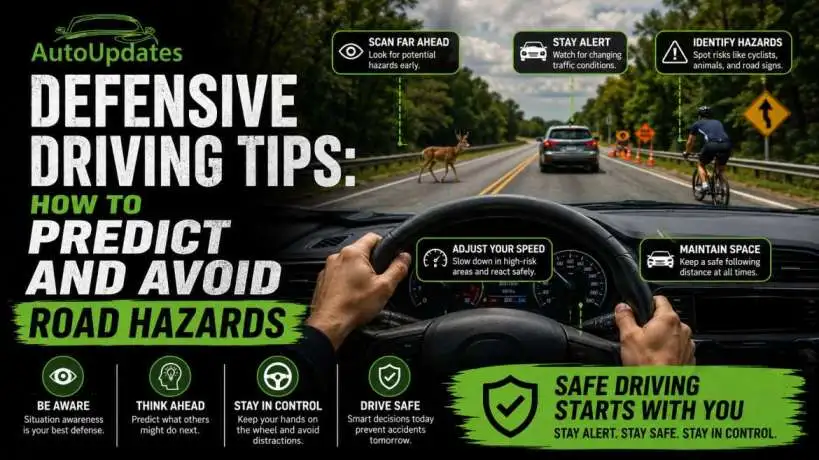
Defensive driving is the practice of anticipating potential hazards rather than merely reacting to them. Key tips include maintaining a three-second following distance, scanning the road 12 seconds ahead, and always having an "escape route."
To drive defensively, eliminate distractions, follow speed limits, and never assume other drivers will follow the rules. By staying alert and predictable, you significantly reduce the risk of collisions caused by bad weather, road debris, or erratic motorists. Safety begins with your mindset, not just your brakes.
Key Takeaways: Staying Alive in a Distracted World
- The Golden Rule: Anticipation is your best weapon. Don’t just look at the bumper in front of you; look three cars ahead.
- The Buffer Zone: Maintaining a 3-to-4 second gap provides the literal "space" you need to correct for others' mistakes.
- Active Observation: Defensive driving isn't passive—it’s an investigative process of identifying hazards before they manifest.
- Control the Controllables: You can't fix a reckless driver, but you can change your position relative to them.
You may also read :- Best Driving Experience Tips and Tricks for Safer Rides
Why We Need Defensive Driving Tips Now More Than Ever
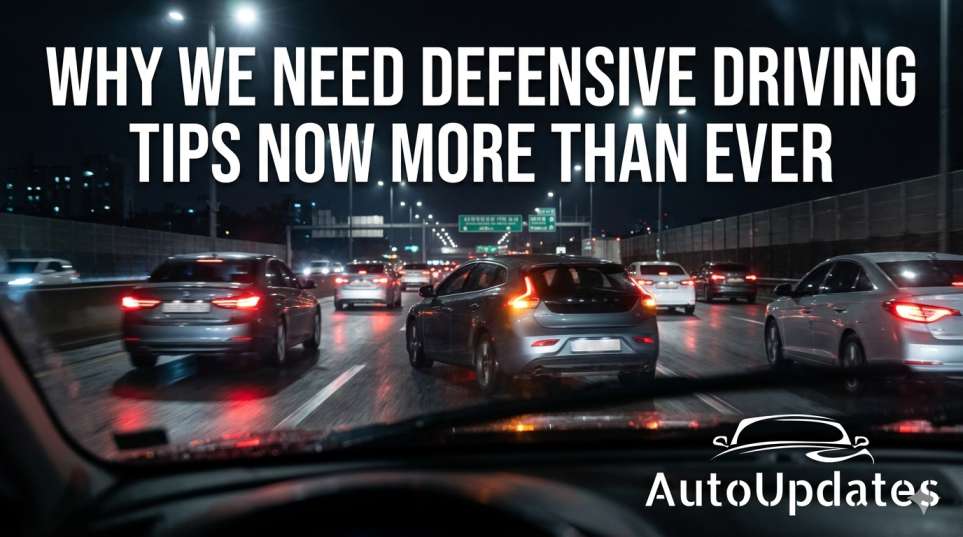
Let’s be honest. The road has changed. Ten years ago, the biggest threat was a driver spilling their coffee. Today? It’s the glowing rectangle in everyone’s hand. We’ve seen the data, and it isn't pretty. Distracted driving is at an all-time high, making defensive driving tips not just "good advice" for your insurance premium, but a literal survival strategy.
In this guide, we’re moving past the "keep two hands on the wheel" basics. We’re diving into the psychology of the road, the physics of a collision, and the tactical maneuvers that seasoned pros use to stay out of the body shop. Whether you are a veteran commuter or looking for defensive driving tips for beginners, the goal remains the same: arrive in one piece.
The Core Philosophy: Importance of Defensive Driving
Why does this matter? Because most people drive "reactively." They wait for a brake light to flash before they slow down. They wait for a swerve before they move. The importance of defensive driving lies in shifting that mindset from reaction to proaction.
A Real-World Scenario: The Intersection Ghost
Imagine you’re first in line at a red light. It turns green. A reactive driver hits the gas immediately. A defensive driver pauses, looks left, looks right, and then proceeds. We call this the "two-second scan." Last year, this exact habit saved a colleague of ours from a T-bone collision when a delivery truck blew a red light at 45 mph. The truck driver wasn't "evil"—he was just checking his GPS.
The Hot Take: Your "Right of Way" Is Meaningless
Here is a bitter pill to swallow: Being right won’t fix a totaled car. We see drivers get into "ego battles" over merging or lane positioning because they have the legal right of way. In the world of defensive driving, the right of way is something you give, never something you take. If you insist on your "right" while a semi-truck is merging into your lane, you might be legally correct, but you’ll be correct in an ambulance.
Technical Under-the-Hood: Kinetic Energy Physics
When we talk about the importance of defensive driving, we’re fighting physics. Kinetic energy increases with the square of speed. If you double your speed, you quadruple the energy involved in a crash. Defensive driving is essentially the art of managing $KE$ through distance and velocity control.
Pro-Tip #1: The "Exit Strategy" Habit
Always maintain an "out." When driving in traffic, try to ensure you have an open space to either your left or right at all times. If the car in front slams on their brakes and you can't stop, you need a pre-planned escape route that doesn't involve a head-on collision.
Mastering the Basics: What are the 5 Rules of Defensive Driving?
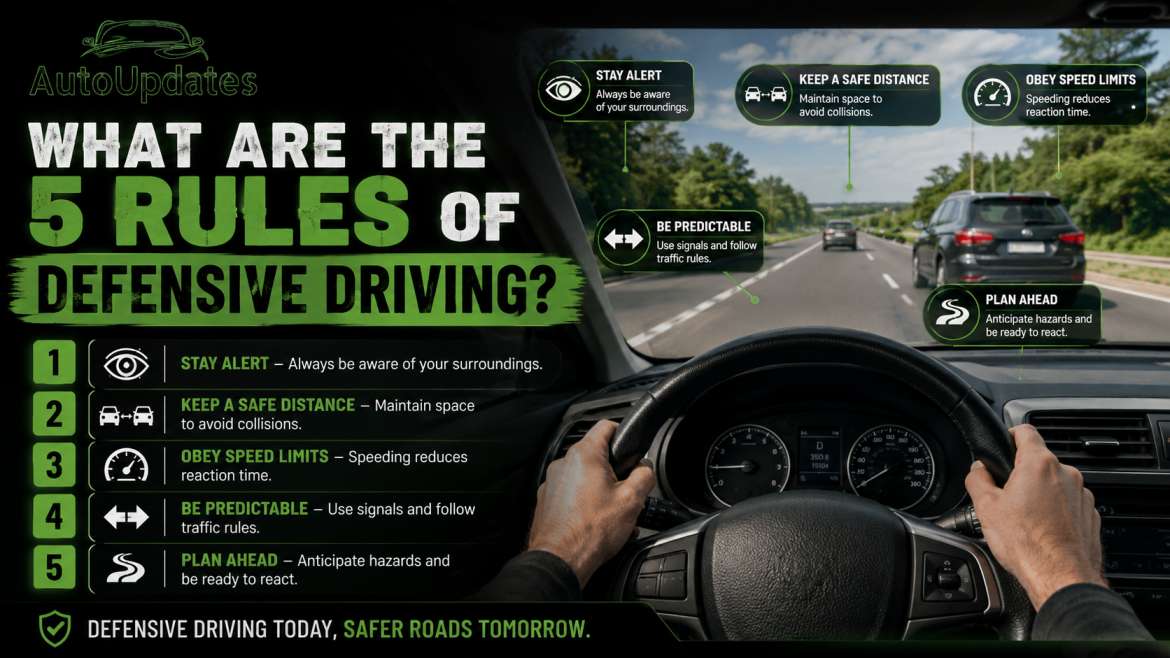
If you’ve ever taken a professional fleet course, you’ve likely heard of the Smith System. When people ask, "What are the 5 rules of defensive driving?" they are usually looking for a framework to organize their focus.
1. Aim High in Steering
Don't stare at the asphalt 20 feet in front of your hood. Look 15 seconds ahead. This gives you a panoramic view of the road’s "biasing"—meaning you see the construction zone or the slowing traffic long before the person in front of you does.
2. Get the Big Picture
This is about 360-degree awareness. Check your mirrors every 5–8 seconds. You should know exactly who is in your blind spot at all times. It’s about scanning, not staring.
3. Keep Your Eyes Moving
The human brain is wired to "lock on" to targets (target fixation). If you stare at a hazard, you’ll likely drive right into it. Keep your gaze shifting. Scan intersections, sidewalks, and driveways.
4. Leave Yourself an Out
We touched on this in our Pro-Tip. Avoid "wolf packs"—those clusters of cars driving bumper-to-bumper at high speeds. Drop back. Find the "bubble" of empty space.
5. Make Sure They See You
Use your signals early. Use your headlights even during the day. If someone looks like they might pull out in front of you, a quick "friendly" tap on the horn can break their "cell phone trance."
The Foundation: What are the 3 Basic Principles of Defensive Driving?
If five rules are too many to memorize in a split second, distill it down. When instructors discuss what are the 3 basic principles of defensive driving, they focus on: Visibility, Space, and Communication.
1. Visibility: The Art of Seeing and Being Seen
This isn't just about your eyesight; it’s about "eye-lead time."
- The Scenario: You're behind a large SUV. You can't see through it. A defensive driver will offset their vehicle slightly to the left or right within the lane to see past the SUV’s pillars.
- Technical Detail: This utilizes the "Peripheral Vision Sensitivity" of the human eye, which is better at detecting motion at the edges than in the center.
2. Space: Your Safety Cushion
Space is time. If you have space, you have time to think. We recommend the "Four Second Rule" in ideal conditions. Pick a stationary object (like a sign). When the car in front passes it, count: one-one-thousand, two-one-thousand... if you pass that sign before four, you're too close.
3. Communication: Signaling Intent
Most accidents happen because of a "surprise." A sudden lane change, a sudden stop. Communication is about removing the element of surprise for the drivers around you.
Essential Defensive Driving Tips for Beginners
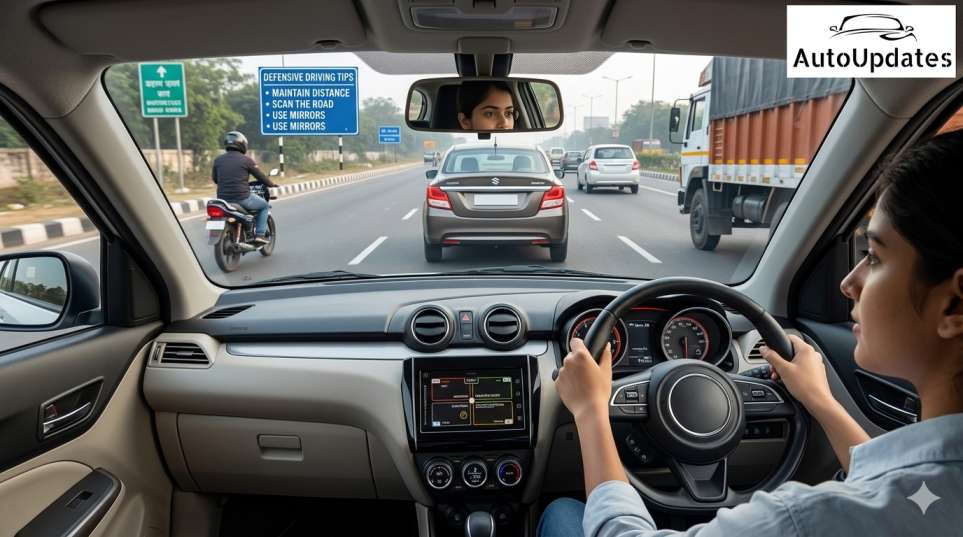
Starting out is nerve-wracking. For a new driver, the road feels like a chaotic video game where you only have one life. These defensive driving tips for beginners are designed to build confidence through competence.
Manage the "New Driver" Tunnel Vision
Beginners tend to fixate on the lines of the lane. This leads to jerky steering and a lack of situational awareness. Pro-Tip: Relax your grip on the wheel. A white-knuckle grip actually reduces your ability to feel the car's feedback.
The "Slippery Slope" of Intersections
Intersections are the most dangerous places on earth for a novice.
- The Fact: Over 50% of combined fatal and injury crashes occur at or near intersections.
- The Lesson: Never assume a green light means it's safe. It only means you have the legal right to move. Verify that the cross-traffic is actually stopping.
Under-the-Hood: Brake Fade and Modulation
Beginners often "ride" the brakes on long hills, leading to "brake fade"—where the pads overheat and lose stopping power. Learn to engine-brake or use "stab braking" to keep the system cool. Understanding the mechanics makes you a more empathetic driver to your vehicle’s limits.
Advanced Tactics: Beyond the Handbook
We've covered what are the 5 rules of defensive driving, but what about the "unspoken" stuff? The stuff that comes from millions of miles of experience?
Weathering the Storm
When rain starts, the first 10 minutes are the most dangerous. Why? Because the water mixes with the oil and grease on the road surface to create a literal "slip-and-slide."
-
Hot Take: All-wheel drive (AWD) is a trap. It helps you go, but it does absolutely nothing to help you stop. We see more AWD SUVs in ditches during snowstorms than FWD sedans because of "false confidence."
The Psychology of the "Aggressor"
When you see someone weaving through traffic, your instinct might be to block them or "teach them a lesson." Don't. You don't know why they are driving that way. Maybe they’re a jerk; maybe they’re rushing to the hospital. Either way, your goal is to get as far away from them as possible. Let them go. Let the police handle them.
Pro-Tip #2: The "Blind Spot" Shadow
If you can't see a truck driver's face in their side mirror, they cannot see you. Avoid lingering next to large trucks. Pass them quickly or stay well behind. Being in a truck's blind spot is like being invisible.
Common Myths vs. Reality
| Myth | Reality |
| "I have fast reflexes, so I can tailgear." | Reaction time is roughly 1.5 seconds. At 60 mph, you travel 88 feet before your foot even touches the brake. |
| "Hands-free calling is safe." | It’s the cognitive distraction, not just the physical one. Your brain "filters" out visual data when you're in a deep conversation. |
| "New cars with auto-braking make defensive driving obsolete." | Sensors fail. Cameras get blocked by dirt. Technology is a backup, not a replacement for your brain. |
Implementing Defensive Driving Tips in Daily Life
It starts the moment you sit in the car.
- Phone on Do Not Disturb: This is the single most effective defensive driving tip in existence.
- Adjust Everything Before Moving: Seat, mirrors, climate control. Once you’re in motion, your focus belongs to the road.
- The "Check-In": Every few miles, ask yourself: "Where is my 'out' right now?" If you don't have one, change your lane or speed until you do.
The importance of defensive driving isn't just about avoiding a ticket. It’s about the fact that you are operating a two-ton machine at speeds the human body wasn't evolved to handle. Respect the physics, respect the variables, and never trust that the other guy knows what he's doing.
FAQ: Quick Answers for Smart Drivers
What are the 5 rules of defensive driving?
The 5 rules (Smith System) are: 1. Aim high in steering, 2. Get the big picture, 3. Keep your eyes moving, 4. Leave yourself an out, and 5. Make sure they see you.
What are the 3 basic principles of defensive driving?
The 3 basic principles are Visibility (seeing hazards early), Space (maintaining a safety cushion), and Communication (using signals and lights to inform others).
Why are defensive driving tips for beginners different?
Beginners lack "perceptual mapping"—the ability to subconsciously recognize hazards. Tips for beginners focus on reducing "tunnel vision" and managing the high cognitive load of learning vehicle controls.
What is the 4-second rule?
It is a space-management tool where you ensure at least four seconds of travel time exists between you and the vehicle in front, allowing for adequate reaction time during sudden stops.
Final Thoughts: The Road is a Shared Space
At the end of the day, applying defensive driving tips is an act of emotional intelligence. It requires putting your ego aside for the sake of safety. We’ve all been frustrated by a slow driver or cut off by a rude one. But the mark of a true "Senior Strategist" of the road is the ability to remain calm, adjust, and keep moving toward the destination.
Drive safe. Stay alert. And always, always leave yourself an out.

.jpg)