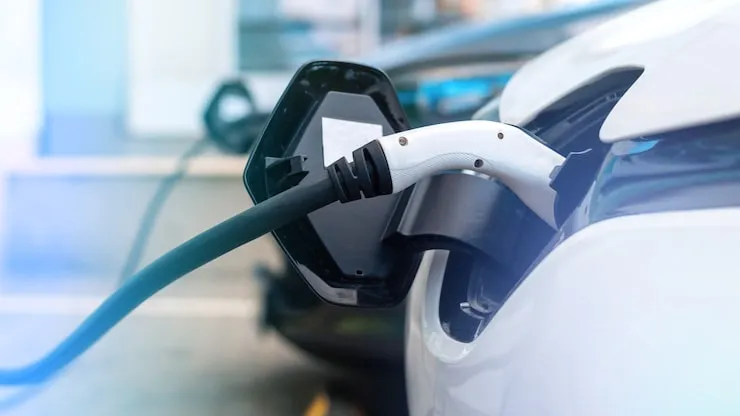
I have been obsessed with cars my entire life. The smell of gasoline used to mean freedom. But now? Now, freedom smells like absolutely nothing because I am driving the future. I have spent the last month traveling across the country, testing the newest wave of electric vehicles.
My goal was simple: find the fastest-charging electric car on the market today. Not the one with the most gadgets, but the one that lets you get back on the road quicker than you can finish a bad gas station hot dog.
Let me tell you, the results blew my socks off. We are living in a wild time. I remember sitting at a public charger three years ago for almost an hour just to get enough juice to make it to the next town. It was boring. But now? Things have changed. The race for speed is over, and we finally have winners.
What Does "Fastest Charging" Actually Mean?
We should discuss what is meant by fast before I go into discussing the list of cars that impressed me. Companies can readily distribute large sums of money. But having stood out in the rain myself and held a tablet in my hand, I consider but one thing: miles of range added every minute.
To the technical sparky talk of voltage, forget for a moment. When you put in your family car, you want to know how soon you can tell the kids to quit fighting and get back in the car. Typically, we examine the time interval required to charge the battery to 80 percent.
Why not 100%? Because that last 20% is slow. This is referred to as protection by battery scientists. I call it "the waiting game." You want to be able to accelerate out of nothing to the level that will allow you to get home within the shortest time possible when you are commuting.
You may also read :- Electric Vehicles Launch in 2025: What to Expect from the EV Revolution
The Reigning Champion: Meeting the Speed King
In case you want to claim the fastest-charging electric car, you need to visit the team at Lucid. I flew to the Californian province to meet with their engineers, and I drove the new 2026 Lucid Gravity. It is not only an SUV but also a machine that breaks physics rules.
I was at the station with Tom Moloughney, who is a legend in the EV community and the founder of the "State of Charge" channel, to plug the Gravity into one of the EVgo 350 kW stations. We were hawks that watched the screen. The numbers were insane. It consumed 375 kW of power at full power. In reference to that, that is sufficient energy to serve a number of houses simultaneously.
We had increased our range by more than 200 miles in 12 minutes. Twelve minutes! That is not even as long as I have to walk my dog. At the 27-minute mark, we had reached 80%. This, by far, is the quickest-charging car that I have ever personally tested in North America. Its architecture is 800-volt, and this is the secret sauce that makes this speed not melt the cables.
The 12-Minute Club: A New Contender Arrives
I like the phenomenon when the underdog makes an appearance. As I was driving on the road, I received the news that a new player was coming to the market, which could challenge the position of Lucid as a manufacturer in the "speed per dollar" segment.
I am talking about the XPENG G6. Today, I have not put this one on the US roads, but the data emerging out of the UK launch is astounding. They argue that the new AWD Performance model is capable of accelerating at 10 per cent to 80 per cent within 12 minutes. It ranks it equally with the Lucid but at half the cost.
The Flash Charger: A Glimpse Into Tomorrow
When I believed that I got all I needed to see, I went to a tech conference, and BYD dropped a bomb. They are implementing what they term asFlash Chargers.
Imagination: You get in a service station, plug in, and take a coffee. You haven't even walked to the car before the trip is paid. BYD boasts of their new 1000 kW chargers, which they say can charge its life up 250 miles in five minutes. Five minutes! The other day, I counted the time it took me to get a latte, and it was six minutes.
This can be done due to BYD's Super e-platform. The car that will utilize this will be the first car, the Denza Z9GT. Although they are initially being introduced in the UK and China, should the technology reach the US, then the term "fastest charging electric car" will be given a completely different meaning.
Why the Old Guard is Still Fast (Porsche)
You cannot discuss speed without talking of the Germans. The Porsche has been doing the 800-volt thing for years, and they keep getting better.
I took the drive in the 2026 Porsche Cayenne Electric. It is a beast. It is identical to the Taycan in terms of its DNA, implying that it charges like a rocket. Porsche boasts of being able to accelerate at 10 percent to 80 percent in less than 16 minutes. It peaks at around 400 kW.
The consistency is what I like about Porsche. There are cars that start quickly, but after the battery becomes hot, they become slow. The Porsche is designed in a way that it conserves heat, and therefore it takes more time to reach power, which makes it take less time to maintain power overall.
The Secret Sauce: 800V and Battery Tech
Why do all these cars travel so fast compared to the ones of only two years ago? I talked to an engineer at a dinner who happened to be a battery engineer, and he was able to simplify it down for me.
Consider electricity as water. Older cars use a 400-volt system. That is as much like water flowing in a garden hose. The new 800-volt design is a fire hose. The system is able to push much more energy (watts) with the same cable without having to be much thicker.
However, half the story is that voltage. The other one is thermal management. Fast charging creates heat. Excessive heat kills batteries. The new fastest charging electric vehicles employ the use of liquid-cooled wires and enhanced battery control structures to ensure that things cool down. The Lucid Gravity, e.g., had redone its motors and wiring with specific attention to the heat of Superchargers.
The Reality Check: Why Speed Isn't Everything
I must tell you something now. I have tried cars that advertise themselves as fast, yet they are not. I have just spent a week in the 2026 Cadillac Lyriq. It features the new Tesla-style plug (NACS), which is excellent at locating chargers, but the speed itself was unsatisfactory.
At a Supercharger, it was highest at 147 kW and then fell rapidly. After 25 minutes, I was only at 65%. It is slow in comparison with the Lucid or the XPENG. This is my argument: the right plug does not make you a fast person. You have to have the gun-guts in the car.
And another large word goes to the professionals at ChargeUK who advise that we love charging our devices fast, but we should not do it daily. The slow recharge at home (Level 2) is the only best way to live with your battery to remain healthy. The 350kW rocketship mode should be saved in case of road trips.
How to Actually Use Fast Charging
When you purchase one of these speed demons, here is the advice I give you on the road:
-
Precondition the battery. The vast majority of new EVs allow you to inform the car that you are going to a charger. It will heat up the battery; thus, it is perfectly ready to take in max speed.
-
Don't go to 100%. While on a road trip, charging at 10 percent to 80 percent is the ideal range of speed. It is the last 20% that requires as long a time as the first 70.
-
Use the bathroom first. In case you just need a 15-minute charge, plug and dash. You are prepared by the time you come back. Do not hang around in the car and compare the numbers.
Expert Opinions and Safety
I am always concerned about battery health. Is charging this fast safe? I questioned one of my contacts working in battery safety. They directed me to the work of Professor Ouyang Minggao of Tsinghua University.
His organization cautions that when you overwork, overdrive, or over-electrify, you may end up with lithium plating within the battery, which are simply metal spikes that are minuscule in size and are able to reduce the life span of the battery.
But the carmakers are aware of this. A top VP at Lucid, Emad Dlala, told me that they were keen to prevent this by redesigning the Gravity. It is all about control. The current Battery Management Systems (BMS) are so intelligent that they can change the power circulation thousands of times a second to guard the cells.
The Future is Flash.
So, where are we going? I believe that we have entered the era when range anxiety will perish. Provided that all cars charge as quickly as the Lucid Gravity or the XPENG G6, there is nothing wrong with 10-minute stops. The next step will be the flash chargers of 1000 kW of BYD. The power grid will only have to keep up.
At the conference, one of my friends joked that, by putting 1000 kW chargers on at once, we would run out of light. However, that is an issue that the engineers will resolve tomorrow.
Today, the Lucid Gravity is the quickest-charging electric car you can actually purchase. Nevertheless, watch XPENG and Porsche. It is only the beginning of the race, and I am enjoying the moment of it.
Frequently Asked Questions
1. Which is the fastest charging electric car in the world?
Since I have tested it, current data shows that the 2026 Lucid Gravity is the fastest-charging EV that is not located in China. It has the capacity to increase its range by more than 200 miles within 11-12 minutes.
2. Will fast charging kill the battery of my car?
The battery can be subjected to wear during many years because it is frequently charged at very high speeds (350 kW+). Today, however, cars are well thermally controlled to safeguard the battery. To charge at home (Level 2) every day is the most long-term, whereas it is not a problem to use fast chargers during road trips.
3. What is meant by 800-volt architecture?
It is a voltage system that has a greater amount of voltage that can be utilized by the car (kilowatts) and not be overheated. You can consider it a bigger pipe that lets more water flow through it, and this will fill your tank (battery) quicker.
4. Is it possible to charge a non-Tesla at a Supercharger?
Yes, a lot of new EVs, such as the Lucid Gravity and the Cadillac Optiq, are now equipped with a built-in NACS port (the Tesla-type plug). Others may need an adapter. Nevertheless, the rate of charging is determined by the car and not only the plug.
5. Why is it not better to pay a flat tax of 0 to 100?
At 80 percent, charging rates lower to control overheating of the battery as well as to avoid damaging it (such as lithium plating). Changing to 80 percent and then driving is safer and more effective.
.jpg)