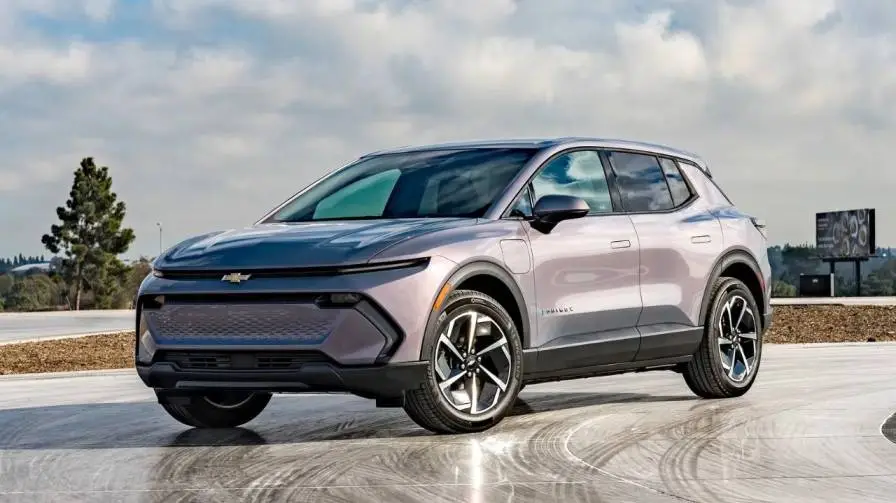
The Chevrolet Equinox EV carries an EPA-estimated range of 319 miles for front-wheel-drive models and 285 miles for all-wheel-drive versions. Those numbers sit on a window sticker. What happens on a real road, in real weather, with real passengers and luggage, tells a different story. This article breaks down the Equinox EV range from every angle that matters: the official figures, what owners actually experience, how cold temperatures change the math, and what you can do to get the most miles out of a charge.
The Official Range Numbers and What They Mean
Chevrolet lists the 2026 Equinox EV with two distinct range ratings based on drivetrain. The front-wheel-drive model achieves 319 miles on a full charge. The all-wheel-drive version drops to 285 miles. That 34-mile gap exists because the all-wheel-drive system adds a second motor that draws power from the same 85-kilowatt-hour battery pack.
Kelley Blue Book shows slightly different figures for certain trims, listing 307 miles for the LT 2 with all-wheel drive and 319 miles for the front-drive RS. The discrepancy comes from how Chevrolet certifies each trim and wheel combination with the EPA. The takeaway is simple: front-wheel drive gives you the highest range number, and adding all-wheel drive costs you roughly 30 to 35 miles of chevrolet equinox ev range.
These EPA figures assume mild temperatures, moderate speeds, and no heavy cargo. They serve as a starting point, not a promise. Chevrolet itself notes that actual range may vary based on ambient temperature, terrain, battery age and condition, loading, and how you use and maintain the vehicle. That disclaimer matters more for the Equinox EV than for a gas-powered car, because electric range swings widely depending on conditions.
Real-World Range: What Owners and Testers Actually See?
A Cars.com reviewer took a front-wheel-drive Equinox EV LT 2 on a road trip from Los Angeles toward Pahrump, Nevada. The route covered elevation gains of over 5,000 feet and passed through Death Valley in 106-degree heat. The EPA-rated 319 miles did not hold up under those conditions. At one point, the built-in range estimate predicted arrival at a charging stop with only 5 percent battery remaining after just 140 miles of driving. Air conditioning, climbing hills, and cruising at highway speeds between 65 and 80 miles per hour all pulled energy from the pack faster than the EPA test cycle assumes.
That experience does not mean the Equinox EV fails at road trips. It means the 319-mile figure represents an ideal. A driver who plans charging stops around 150 to 200 miles of highway driving in summer will have a comfortable margin. A driver who tries to stretch the full rated range between chargers on a hot day with elevation change will find the margin uncomfortably thin.
Read Also: How Long Do Ev Batteries Last In Cold Weather
How Cold Weather Changes the Range Math?
Cold temperatures affect every electric vehicle, and the Equinox EV is no exception. One owner in Michigan reported getting just 1.2 miles per kilowatt-hour during a three-month stretch of 10-to-25-degree weather, which worked out to roughly 102 miles of usable range from the 85-kilowatt-hour battery. That owner was driving at highway speeds with the heater running, conditions that punish efficiency severely.
Another owner developed a practical workaround for winter driving. At minus 18 degrees Fahrenheit, the car's dashboard displayed only 37 miles of remaining range at 22 percent state of charge. The owner reset the trip meter, checked the efficiency reading of 1.7 miles per kilowatt-hour, and multiplied that by the battery percentage. The result matched what the car ultimately delivered. The lesson: the miles-remaining display starts optimistic and corrects itself as conditions settle in. Battery percentage and real-time efficiency give a more honest picture than the big number on the dash.
A Kelley Blue Book consumer review noted a 20-to-30 percent range drop in cold weather, which aligns with what most owners report. If you live where winters drop below freezing, plan for roughly 220 to 250 miles of range from a front-wheel-drive Equinox EV in the coldest months, and less if you do a lot of highway driving with the heat on full.
Charging Speed and Its Effect on Range Confidence
Range anxiety often comes down to charging, not the battery itself. The Equinox EV supports DC fast charging at up to 150 kilowatts. Chevrolet says that rate enables approximately 77 miles of range in 10 minutes. That figure assumes ideal battery temperature and a charger that delivers the full 150 kilowatts.
The Cars.com reviewer found that running the air conditioning while fast charging pulled the charging rate down significantly. What should have been a 20-minute stop stretched closer to 40 minutes because the cooling system competed with the battery for thermal management. On a hot day, turning off the climate control while charging preserves the charging speed. On a cold day, preconditioning the battery before arriving at a charger helps the pack accept electrons faster.
For home charging, the standard 11.5-kilowatt Level 2 setup adds up to 36 miles of range per hour. An overnight charge of eight hours replaces roughly 288 miles, which covers the daily driving needs of most people. The people who feel range pressure are those who cannot charge at home and rely on public infrastructure, or those who regularly drive more than 200 miles in a day.
What Actually Drains Range on the Equinox EV?
Several factors pull energy from the battery faster than the EPA test cycle accounts for. Speed tops the list. The Equinox EV is a compact SUV with a frontal area that pushes air, and aerodynamic drag increases with the square of speed. Driving 75 miles per hour uses noticeably more energy per mile than driving 65.
Climate control ranks second. The heater draws significant power in winter, and the air conditioner does the same in summer. Heated seats and a heated steering wheel use less energy than blasting the cabin heater, which is why many EV owners rely on those features to stay comfortable without draining the pack.
Elevation change matters more than people expect. Climbing 5,000 feet over a road trip forces the motor to work harder, and you do not fully recover that energy on the descent unless you use regenerative braking effectively. The Cars.com reviewer saw range estimates drop sharply during the climb out of Los Angeles, even before reaching the hottest part of the desert.
Cargo and passengers add weight, and weight costs energy. A fully loaded Equinox EV with four adults and luggage will not match the range of a solo driver on an empty highway. Towing reduces range even more, though Chevrolet lists a modest 1,500-pound towing capacity for the model.
You May Also Like: Future of Electric Driving: 2025 Kia Niro EV
Practical Advice for Getting the Most Range
The most effective habit for maximizing Equinox EV range is also the simplest: slow down. Dropping highway speed from 75 to 65 miles per hour can recover a meaningful portion of the range lost to aerodynamic drag. Using the heated seats instead of the cabin heater in winter, and preconditioning the cabin while still plugged in, reduces the energy drawn from the battery once you start driving.
For winter driving, one owner's method of multiplying real-time efficiency by battery percentage gives a reliable range estimate that cuts through the car's early optimism. Reset a trip meter at the start of each drive, watch the miles-per-kilowatt-hour figure, and do the math yourself. The dashboard's range guess will catch up eventually, but the efficiency reading tells you the truth right away.
Planning charging stops around 150-mile intervals on road trips, rather than trying to maximize distance between stops, keeps the battery in a range where charging is fastest and range anxiety stays low. The Equinox EV's 150-kilowatt peak charging rate is adequate for road trips but not exceptional. Building in a buffer for slower-than-expected charging, especially in extreme heat or cold, makes the chevrolet equinox ev range.
Conclusion
The Chevrolet Equinox EV delivers 319 miles of EPA-rated range in front-wheel-drive form, and that number is achievable in mild weather with mixed driving. Highway trips in summer heat, winter commutes in freezing temperatures, and routes with significant elevation change will all pull the real-world figure below the sticker. Owners who understand how temperature, speed, and climate control affect the battery can plan around those variables and drive with confidence. The range is there. It just asks you to pay attention to the conditions that shape it.